Check Refrigerant Lines Insulation
Why It Matters
Damaged insulation on refrigerant lines causes your AC to lose efficiency, working harder and costing more to cool your home.
Quick Guide
- 1
Gather your tools and materials
You'll need: basic tools. Materials required: Pipe insulation foam.
- 2
Perform the check refrigerant lines insulation
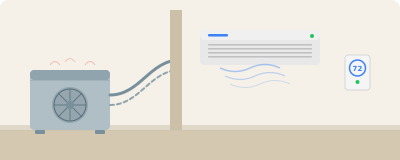
Inspect the foam insulation on copper refrigerant lines running between indoor and outdoor HVAC units.
- 3
Verify and clean up
Check that the work was completed correctly and clean up your workspace.
Tools & Materials
Materials
- Pipe insulation foam
Community Tips
Refrigerant lines lose 5-10% efficiency when insulation foam degrades, so inspect for cracks, peeling, or compression every 12 months—particularly where lines bend near the condenser unit. Armacell Tubolit Pipe Insulation ($15-25 per 6-foot section) resists UV damage and maintains R-value in direct sunlight better than generic foam alternatives.
Never wrap refrigerant lines with standard fiberglass or rockwool insulation; these materials absorb moisture and accelerate corrosion of copper tubing, potentially requiring a full line replacement ($500-1,200). Closed-cell foam like Frost King Rubber Insulation ($8-14 per roll) is essential for outdoor applications where water exposure is unavoidable.
Replacing compromised refrigerant line insulation costs $20-50 in materials and prevents $1,500+ compressor failures caused by temperature stress on exposed tubing. Pre-split foam like Everbilt Self-Sealing Pipe Insulation ($10-18) installs in minutes without removing lines, making it the most cost-effective maintenance step homeowners skip. ---