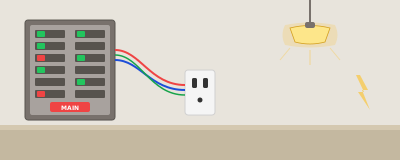
Electrical Panel Assessment (20-Year Home)
Why It Matters
Homes over 20 years old often have panels undersized for modern electrical loads. An overloaded panel is a fire waiting to happen.
Quick Guide
- 1
Gather your tools and materials
You'll need: basic tools. Materials required: necessary materials.
- 2
Perform the electrical panel assessment (20-year home)
Have an electrician evaluate your electrical panel capacity and condition, especially if it is the original panel.
- 3
Verify and clean up
Check that the work was completed correctly and clean up your workspace. If always - professional electrical inspection, consider calling a professional.
Community Tips
Twenty-year-old electrical panels frequently contain outdated breaker configurations and deteriorating bus bars that create fire hazards; if the panel shows corrosion, multiple blank spaces where breakers were removed, or uses Federal Pacific or Zinsco breakers (known failure rates exceeding 60%), professional replacement should not be delayed. A licensed electrician's assessment costs $150-300 but can prevent catastrophic failures that insurance may not cover.
A Fluke 87-V Digital Multimeter ($200-280) is essential for verifying voltage readings across individual breaker positions and identifying phantom loads that aging panels commonly develop; this prevents guesswork when deciding between repair and replacement. Non-contact voltage testers miss the nuanced diagnostics needed for 20-year-old systems where deterioration is often partial rather than complete.
Full panel replacement with updated breaker configuration and expanded capacity (60 to 200 amps) typically runs $1,200-2,500 depending on local codes, but upgrading only the damaged breaker sections costs $400-700 and buys 3-5 years before comprehensive work becomes mandatory. Deferring assessment costs nothing now but compounds exponentially—water damage or pest intrusion in a failing panel can escalate costs to $4,000+ once secondary systems are compromised. ---