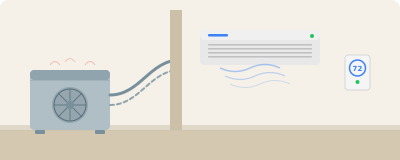
HVAC Efficiency Assessment (10-Year)
Why It Matters
HVAC systems lose efficiency with age. A 10-year assessment identifies whether repairs or replacement will save you more money long term.
Quick Guide
- 1
Gather your tools and materials
You'll need: basic tools. Materials required: necessary materials.
- 2
Perform the hvac efficiency assessment (10-year)
Have a professional evaluate your HVAC system's efficiency and performance after 10 years of service.
- 3
Verify and clean up
Check that the work was completed correctly and clean up your workspace. If always - requires professional diagnostic equipment, consider calling a professional.
Community Tips
After 10 years, HVAC systems typically operate at 70-75% efficiency due to refrigerant leaks, compressor wear, and airflow restrictions; a professional combustion analysis and refrigerant charge verification can identify whether repairs or replacement is more cost-effective before efficiency drops below 60%.
A Fieldpiece HS36 Digital Multimeter ($120-150) enables homeowners to verify basic electrical connections and voltage at the disconnect switch during the assessment, catching loose wiring issues that professional technicians often charge $200+ to diagnose separately.
Ten-year-old systems frequently contain R-22 refrigerant, which is now illegal to manufacture in the U.S. and costs $300-600 per pound to recharge versus $50-150 for R-410A in newer units—repair costs on aging R-22 systems can exceed replacement value within 2-3 years. ---