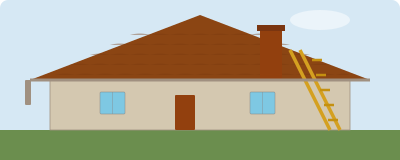
Inspect Roof Flashing
Why It Matters
Flashing failures are the number one source of roof leaks. Most roof leaks start at flashing points, not from shingle failure.
Quick Guide
- 1
Gather your tools and materials
You'll need: Binoculars. Materials required: necessary materials.
- 2
Perform the inspect roof flashing
Check flashing around chimneys, vents, skylights, and wall junctions for gaps, rust, or lifting. Safety note: Inspect from ground level when possible.
- 3
Verify and clean up
Check that the work was completed correctly and clean up your workspace. If any visible gaps or lifting flashing, consider calling a professional.
Tools & Materials
Tools
- Binoculars
Community Tips
Flashing failures are the leading cause of interior water damage within 5-10 years of roof installation, often going undetected until drywall staining appears inside walls. Missing or lifted flashing around chimneys, vents, and skylights requires immediate caulking with a marine-grade sealant like Sikaflex 291 ($12-18) to prevent costly structural rot.
Binoculars eliminate the need for roof access on single-story homes and reduce fall risk significantly -- 10x magnification allows clear inspection of flashing overlaps, separation points, and sealant deterioration from ground level without requiring a ladder or scaffolding rental ($50-150/day).
Replacing compromised roof flashing runs $300-800 per penetration (chimney, vent stack, or skylight) when caught early, but water intrusion damage can escalate repair costs to $2,000-5,000+ for interior wall reconstruction and mold remediation if left unaddressed for more than one season. ---