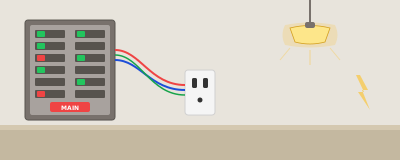
Test GFCI Outlets
Why It Matters
GFCI outlets prevent electrocution in wet areas like kitchens and bathrooms. A failed GFCI is a serious safety hazard.
Quick Guide
- 1
Gather your tools and materials
You'll need: basic tools. Materials required: necessary materials.
- 2
Perform the test gfci outlets
Press the test and reset buttons on all GFCI outlets to ensure they trip properly. Safety note: Do not use wet hands.
- 3
Verify and clean up
Check that the work was completed correctly and clean up your workspace. If if any gfci fails to trip or reset, consider calling a professional.
Community Tips
GFCI outlets protect against electrical shock by detecting ground faults and cutting power in milliseconds; test them monthly by pressing the "TEST" button to trip the outlet, then press "RESET" to restore power—if the outlet doesn't trip, it requires professional replacement. Leviton's GFCI outlets ($15-25) are industry-standard and clearly labeled, making the test button easy to locate.
Never assume a GFCI outlet is functioning properly without physically testing it, as internal wear can cause the mechanism to fail silently while the outlet appears operational. A failed GFCI provides zero shock protection despite looking identical to a working unit, which is why the monthly test is non-negotiable in bathrooms, kitchens, and outdoor areas.
A Klein Tools Outlet Tester ($10-15) should accompany any GFCI test to verify that power is actually flowing to the outlet before and after testing—this dual-check catches wiring errors or breaker trips that manual testing alone might miss. ---